
What should Pittsburgh boaters know about no wake zones and river traffic? Downtown, the water between the Fort Pitt, Veterans and West End bridges is a slow, no wake zone on summer and fall weekends, and anywhere in Pennsylvania you must slow to no wake speed within 100 feet of shore, docks and other boats. Add a healthy respect for towboats, barges and paddlers, and you know most of what matters.
A no wake zone is easy to follow once you know where it starts and what it asks of you. This guide covers what slow, no wake speed means, every zone on the water near the city, and how to share the rivers with commercial traffic on a pontoon boat rental in Pittsburgh. Our dock at Vic's Boat Park in McKees Rocks sits on the Ohio River, minutes from the Point, so these are the rules you will meet on almost every trip.
A no wake zone is a stretch of water where boats must run at slow, no wake speed. In plain terms, that is the slowest speed that still lets you steer. The bow stays down, the boat stays level, and only a small ripple trails behind you.
There is no posted speed number to aim for. A pontoon and a fast runabout throw very different waves at the same speed, so the test is the water behind you, not the dial in front of you.
.webp)
A wake carries more energy than it looks. One fast pass can slam a tied up boat into a dock, rock a kayak hard enough to flip it, or knock someone off their feet on a crowded deck. On the rivers, it also rolls into riverwalks, ramps and floating docks that were never built to take a pounding all day.
The rules protect people first: swimmers, waders, anglers on the bank, paddlers and passengers on other boats. They also protect property and the shoreline itself. Slowing down in the right places costs you a few minutes and keeps everyone around you safe.
Pennsylvania lists its special river rules for Allegheny County in 58 Pa. Code 111.2. These are the slow, no wake areas it names.
Boats are limited to slow, no wake speed from the Fort Pitt Bridge on the Monongahela and the Veterans Bridge on the Allegheny, down to the West End Bridge on the Ohio. That wraps the whole Point and the stretch past the stadiums.
Outside those times, the downtown zone lifts, but the statewide 100 foot rule below still applies.
The back channel of Twelve and Fourteen Mile Islands, from Mile 12.8 to Mile 14.5, is a slow, no wake area. The code lists no season for it, so treat it as slow at all times.
The area behind Nine Mile Island, Mile 10.0 to Mile 10.4, is a designated ski zone. Boats that are not towing a skier or other watersport rider must stay at slow, no wake speed there.
Boats are limited to slow, no wake speed from the mouth of the Youghiogheny River to the McKeesport Access Area, a distance of about 200 yards.

This is the no wake rule you will use most. Under 58 Pa. Code 103.3, boats must stay at slow, no wake speed within 100 feet of:
On Pittsburgh's rivers that covers a lot of water: marina entrances, the riverwalk walls where boats tie up, fishing boats anchored off the bank and every launch ramp. When in doubt, picture a 100 foot bubble around anything that isn't moving and idle through it.
Pennsylvania's operating rules also cover how close you run to boats that are underway. The Fish and Boat Commission regulations recap spells them out.
On a pontoon, one more rule matters: no one may ride outside the passenger area while the boat is moving, so keep everyone off the front deck and rails.
Pittsburgh's rivers are working rivers. Towboats push long strings of barges through the city, and they need the channel to travel safely. A loaded tow cannot stop or turn quickly, and from the pilothouse there is a long stretch of water ahead of the barges that the pilot cannot see.
Sightseeing boats and larger passenger vessels deserve the same space. They maneuver slowly near their docks, so give them room to turn.
Kayaks, canoes and paddleboards share the same water you do, and they sit low enough to disappear against a dark shoreline or in sun glare. Your wake is a nuisance to another pontoon, but it can tip a paddler over.
After sunset, paddlers only have to show a white light in time to avoid a collision, so they can be hard to spot. For more habits that keep everyone safe, read our guide to what not to do on a pontoon boat.
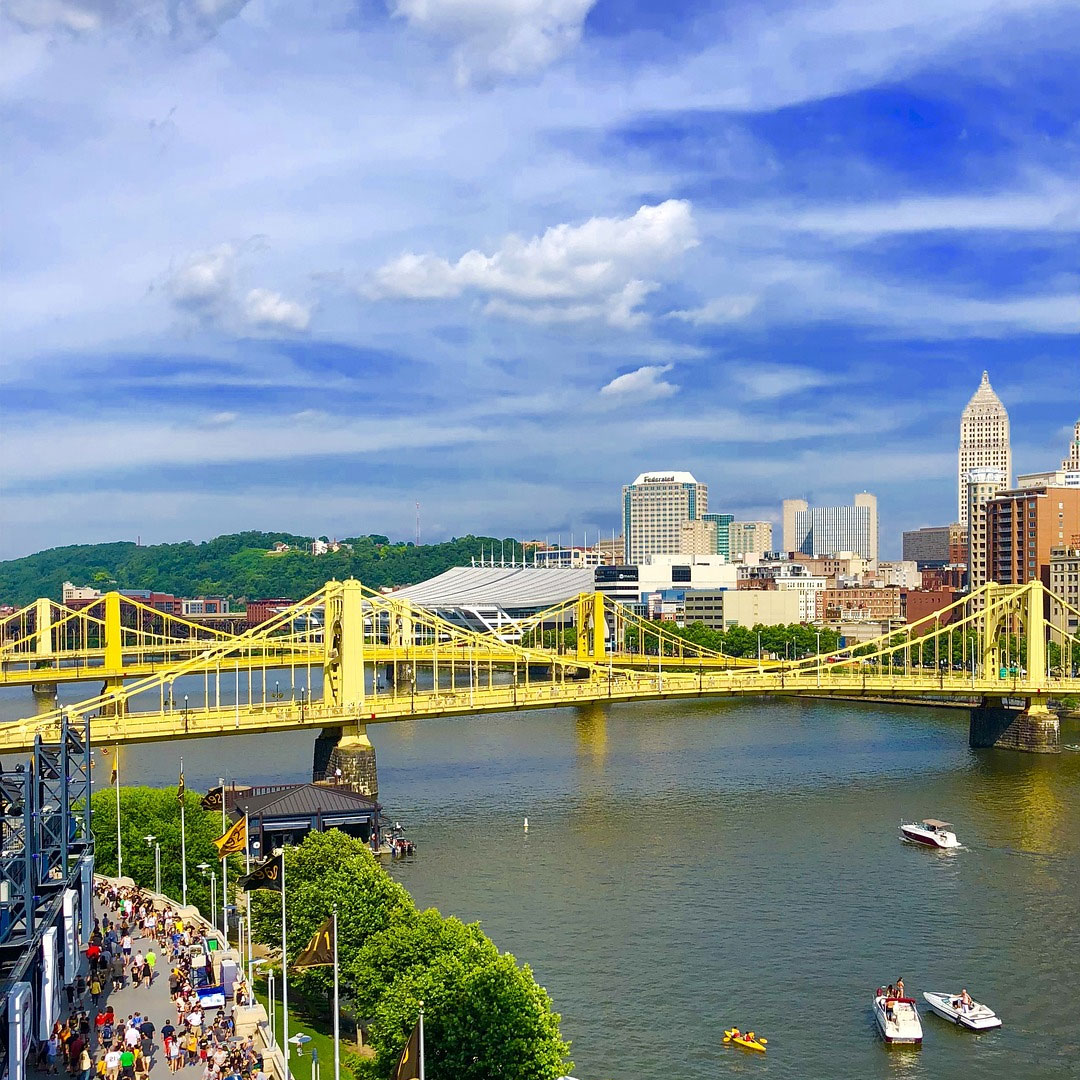
The downtown zone exists because that water gets crowded. On summer weekends, game days, concerts and fireworks nights, boats stack up around the Point and along the North Shore. Expect to idle, watch for patrol boats, and plan for temporary restrictions on big event days. Follow any posted instructions or directions from officers on the water.
If you want open water and fewer boats, a weekday trip is your best bet. If you want the skyline and the buzz, a weekend works great, just plan on a slow cruise through downtown. The Coast Guard also limits where you can anchor and stop near the Point, which our guide to what you can and can't do on local rivers explains.
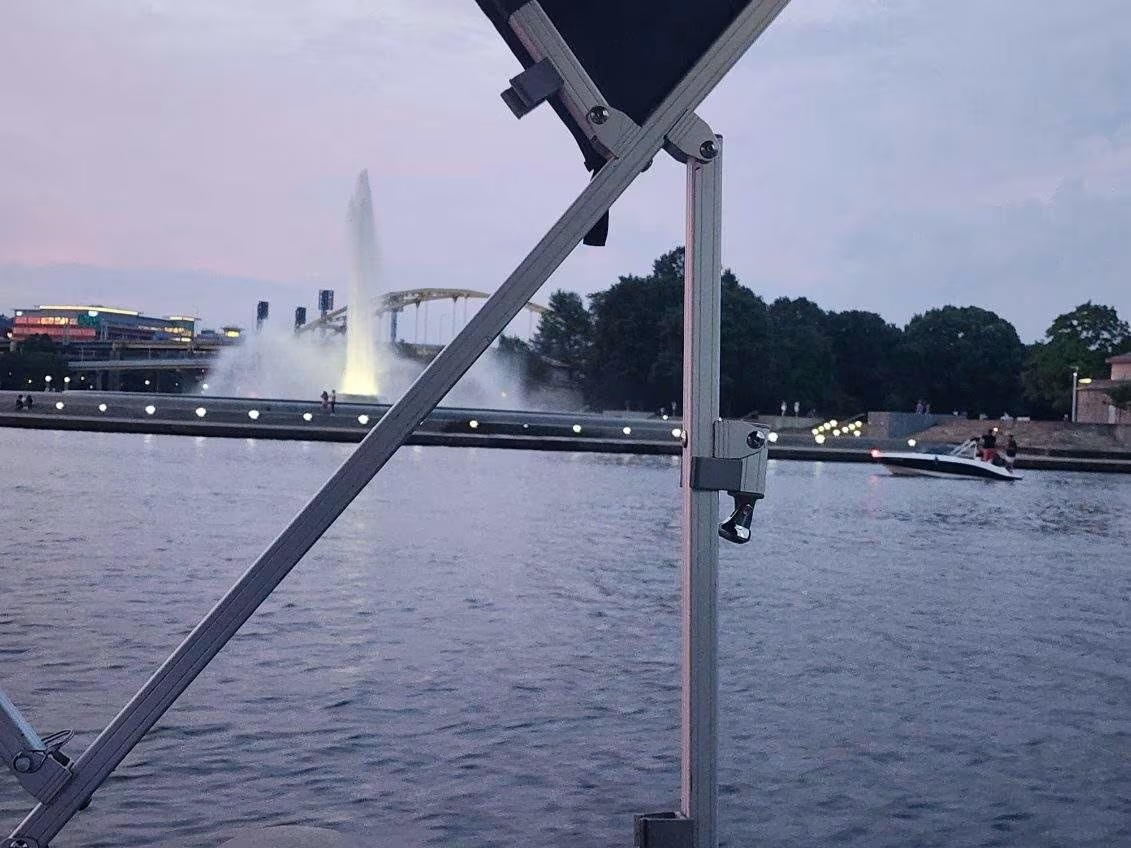
Our rentals run until 9 PM, so on many evenings you will be on the water as the light fades. Pennsylvania requires all boats to show their running lights between sunset and sunrise and when visibility is poor.
The skyline at dusk is one of the best views in the city, and taking it slow is the best way to enjoy it.
Anyone born on or after January 1, 1982 needs a Pennsylvania Boating Safety Education Certificate to drive a boat with more than 25 horsepower, and every pontoon in our fleet is over that line. Only people who sign the rental agreement may drive, and the driver must stay sober. Arrive 5 to 10 minutes early on your first rental for our safety briefing. Not sure who in your group can drive? Ask about a captain when you book.
For the basics of channel markers and which side to keep them on, read our guide to the 3 R rule in boating.
It means you must run at slow, no wake speed, the slowest speed that still lets you steer. Your boat should sit level with only a small ripple behind it. There is no set speed figure, so judge it by the water behind your stern and slow down more if you see white water rolling off the back.
From May 1 to November 1, on weekends from 3 PM Friday until midnight Sunday. It also runs from 3 PM on the day before Memorial Day, July 4 and Labor Day until midnight of the holiday. The zone covers the water between the Fort Pitt, Veterans and West End bridges.
Within 100 feet of the shoreline, docks, launch ramps, swimmers, people wading, and anchored, moored or drifting boats, you must stay at slow, no wake speed. The same applies in any area marked with slow, no wake buoys. This rule applies on every Pennsylvania waterway, all year.
Watch your wake. Every driver is responsible for the waves their boat makes and any damage they cause. Slow down near docks, paddlers, anchored boats and the shore, give barges plenty of room, and never pass close to a smaller boat at speed. Good manners on the water are mostly about speed and space.
On a busy river it can be. Speed that feels fine on open water can be too fast near traffic, so Pennsylvania requires a safe speed that lets you stop or turn in time and never endangers people or property. Inside a no wake zone or within 100 feet of shore and other boats, you must slow to no wake speed.
Ready to cruise the three rivers? Book your pontoon rental and we'll go over the river rules at the dock before you head out.
Join our community and enjoy incredible savings while embarking on unforgettable boat rentals. Whether you're looking to cruise along the iconic Three Rivers, host a special event on the water, or simply unwind with a relaxing day of boating, Subscribe and Save 15% off your next rental is your ticket to more fun and less cost.

