
Do pontoon boats flip? Very rarely. A pontoon's wide deck rides on big sealed tubes, which makes it one of the most stable boats you can drive, and on Pittsburgh's rivers a flip almost always takes a mix of overloading, high speed turns and bad weather.
So do pontoon boats sink? They can, but it is also uncommon, because the tubes keep the boat afloat even when water washes over the deck. Below we explain what keeps a pontoon upright, the few things that can tip or swamp one, and the simple habits that keep your day on a pontoon boat rental in Pittsburgh calm and dry.
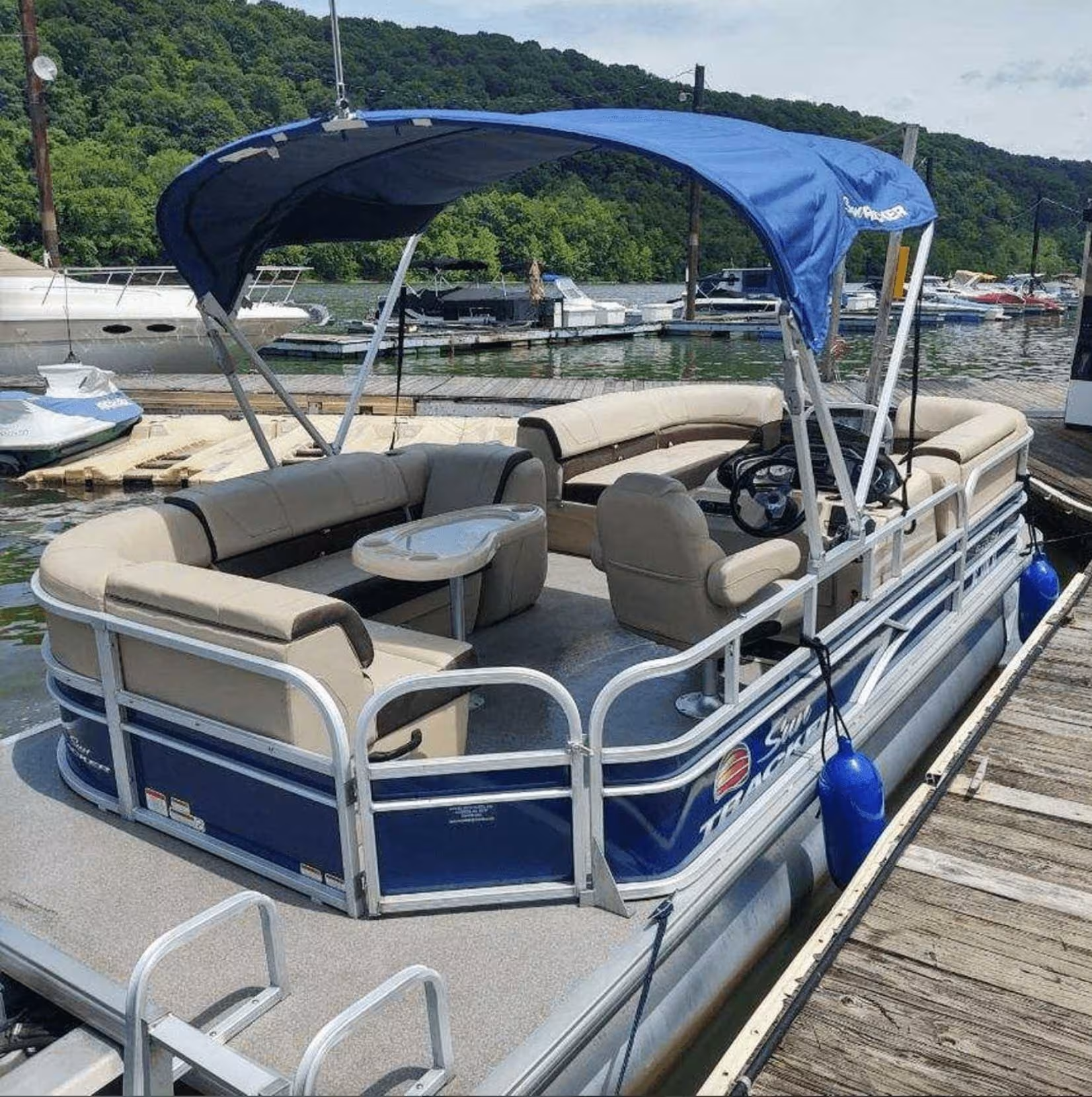
Most small boats balance on a single hull shaped like a V. A pontoon works differently. Its deck sits on two or three long aluminum tubes spread across the full width of the boat.
That is why pontoons are a favorite for families and first time drivers. You would have a hard time tipping one on calm river water even if you tried.

Rare is not the same as impossible. When a pontoon does go over, it is usually because several of these happened at once.
Cranking the wheel hard at full throttle can lift the outside tube out of the water. Push it far enough and the boat can roll. Slow down before you turn, and keep turns wide.
Every pontoon has a capacity plate near the helm with a people limit and a weight limit. A boat over either limit rides lower and reacts badly to waves. Even under the limit, crowding everyone onto one side or the front changes how the boat sits in the water.
A pontoon's flat deck and bimini top catch wind like a sail. A strong gust from a passing storm can push the boat hard sideways. Summer thunderstorms are the biggest weather risk on our rivers.
Hitting a large wake straight on at speed can bury the front of the boat. That is the main way a pontoon takes water over the deck.
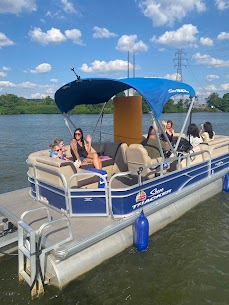
Pontoon boats can sink, but it takes something serious. A pontoon floats because of the air sealed inside its tubes. Water that splashes onto the deck runs off over the sides, so a wave over the bow is not a disaster.
For a pontoon to actually sink, water has to get inside the tubes. That can happen when a tube is punctured by a rock, a log or a hard hit against a wall or pier. Many modern pontoons have tubes divided into sealed chambers, so one puncture floods only part of a tube instead of the whole thing.
For renters, the takeaway is simple: drive at a sensible speed, watch for floating debris, and keep the boat off rocks and shallow banks.
Submarining is the word boaters use when the front of a pontoon dives under a wave instead of riding over it. Water rushes across the front deck, the boat slows suddenly, and anyone sitting up front gets soaked or knocked off balance. In the worst cases it can throw people into the water.
It usually happens when a driver runs fast into a big wake and then chops the throttle, which drops the nose right into the next wave. To avoid it:
The Allegheny, Monongahela and Ohio rivers are calmer than open water. The things that rock a pontoon here are local and predictable.
Keep a sharp lookout, give everything a wide berth, and the rivers stay easy.
Weather is the one factor no driver controls, so we make that call for you. Our team decides on the morning of every rental whether river and weather conditions are safe. If we cancel, you can reschedule, and if a new date does not work, you get a full refund.
Once you are out, keep watching the sky. If you hear thunder or see a dark storm line moving in, head back to the dock at a safe speed. Our guide to what happens to your reservation when rain is in the forecast has the details.
.webp)
You do not need to be an expert to keep a pontoon steady. These habits handle almost every risk.
The 3 R rule in boating is a handy way to remember this mindset on every trip.
This is very unlikely, but a plan costs nothing. Make sure everyone knows it before you leave the dock.
The Fish and Boat Commission regulations recap lists the required safety gear and rules for every Pennsylvania boater. For more ways to stay safe, read what not to do on a pontoon boat.
Very low. A pontoon floats on sealed tubes, so water over the deck runs off rather than filling the boat. It takes serious tube damage, such as a puncture from a rock or a hard collision, for a pontoon to sink. Careful driving, a good lookout and staying off shallow banks keep the risk tiny.
Pontoons are made for calm inland water like Pittsburgh's rivers. They handle normal wakes well, but large waves and storms are where trouble starts. Slow down before big wakes, cross them at an angle, keep weight toward the back, and head in if a storm builds. We also check river and weather conditions on the morning of every rental.
Small open boats such as canoes, kayaks and small motorboats are the ones most often involved in capsizing and swamping accidents, because they sit low and tip more easily. Pontoons are among the most stable recreational boats because their weight rests on wide, sealed tubes. On any boat, wearing a life jacket is the best protection.
The capacity plate near the helm sets the limit for both people and weight, and you must stay under whichever comes first. Our pontoons carry 7 to 10 guests depending on the boat. Coolers, gear and dogs count toward the weight, so a heavy load can hit the limit before every seat is full.
Moving around at slow speed is normal on a pontoon, but everyone should sit down when the driver speeds up or turns. Pennsylvania prohibits anyone riding outside the passenger area of a pontoon, and on boats under 20 feet nobody may stand while the boat goes faster than slow, no wake speed.
Want a steady, easy day on the water? Book a pontoon rental from Vic's Boat Park in McKees Rocks and explore all three rivers with your crew.
Join our community and enjoy incredible savings while embarking on unforgettable boat rentals. Whether you're looking to cruise along the iconic Three Rivers, host a special event on the water, or simply unwind with a relaxing day of boating, Subscribe and Save 15% off your next rental is your ticket to more fun and less cost.

